Specimen
§ A Destination for Linguistics Enthusiasts
¶ LinguisticsNews.com is the frontrunner in sharing linguistics knowledge, catering to both professionals and the intrigued, with up-to-date news, research, and expert commentary.
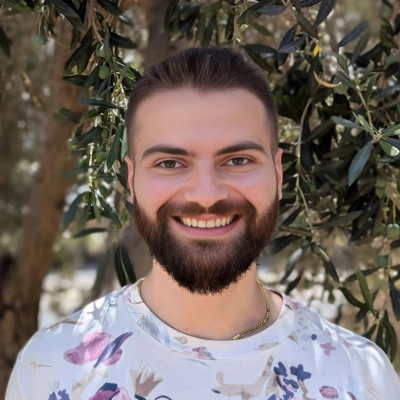
Hasan Alhamwi — October 19, 2026
The U.S. Foreign Service Institute, which trains American diplomats, puts Arabic in its top category of languages that are "exceptionally difficult for native English speakers." The way it measures that difficulty is time. It estimates about 88 weeks of full-time training, or 2,200 class hours, to reach a professional level of speaking and reading in Arabic, compared with 30 weeks for Spanish or French.
I read that number as a measure of distance. Learning Italian if you know Spanish is not that complicated because the two are very similar. From an English speaker's perspective, Arabic is very distant. Arabic is a Semitic language and English is a Germanic, Indo-European one, so very little vocabulary or grammar carries over. In a 2004 paper, economists Barry Chiswick and Paul Miller built a well-known measure of each language's distance from English, and they based it on how hard Americans find that language to learn.
So my opinion, and it's an opinion rather than a measurement, is that Arabic isn't harder in the sense of needing a special talent. It takes longer because English speakers start with almost nothing they already recognize.
I'm a native Arabic speaker from Syria. I learned English as an adult, after a traumatizing experience trying to learn English and French in school. Years later I learned Spanish through comprehensible input, without ever taking a class or opening a textbook, and I later built my work around the same idea.
There are many reasons Arabic has its reputation as a super difficult, intimidating language, and in my experience several of them have little to do with the language itself.
Many people want to learn Arabic for religious reasons, to read the Quran and religious texts. That goal needs a very high level of proficiency, and if you start with it, yes, it's hard. For those learners, I always say to stick with Modern Standard Arabic.
Arabic is also spoken across more than 20 countries, and that scares people. They think they need to learn Moroccan, Yemeni, Gulf, Iraqi, Syrian and every other variety. If you want to talk comfortably with Arabs from every country, you do need extra effort. But I recommend that learners pick one spoken variety and at least understand Modern Standard Arabic, and that goes a long way.
In my experience, Arabs from the Levant, Egypt, Iraq and the Gulf usually understand each other. Go to Doha, Dubai or Riyadh and you'll see it. An Egyptian in Dubai doesn't start speaking Emirati. Everyone keeps their own dialect, and people still follow each other. They might not catch every word, but that's also the case for a Scottish guy visiting Alabama. The varieties of the Maghreb, meaning Morocco, Algeria and Tunisia, are a different story, and many of us from the east find them hard to follow. A 2018 study comparing the vocabulary of Arabic dialects found that, among the varieties analyzed, the North African ones were generally farthest from Modern Standard Arabic and the Levantine ones closest.
Then there's the writing system, which scares a lot of people. My own preference, and the way I acquired Spanish, is to focus on listening first and leave reading for later. I couldn't read Spanish for a long, long time. With Arabic there's an extra reason. Books and newspapers are written in Modern Standard Arabic, so there's very little easy reading in the spoken varieties for a beginner to use. Reading enriches the experience, and I find it much easier once your ears already know the language. Some learners start with the alphabet and do well, especially if they need to read early. I've just seen many beginners spend their first months on the script and walk away convinced that Arabic is too hard.
Some courses also start with all 12 pronouns and their conjugations. I don't think a beginner needs to memorize all of them in the first weeks.
The most common question about learning Arabic is where to start. I come from the Levant, so my answer is biased toward Levantine. But if I take my bias out, my advice to anyone whose goal is talking with people is to start with a spoken variety rather than with Modern Standard Arabic, the formal Arabic of news and books.
My reason is how Modern Standard Arabic is used. It's nobody's mother tongue. People use it in writing and on formal occasions like the news, but at home, washing the dishes or brushing their teeth, they use their own dialect. The linguist Charles Ferguson described this in his classic 1959 paper on diglossia, with Arabic as one of his main examples. He wrote that the formal variety is learned largely through formal education and "is not used by any sector of the community for ordinary conversation."
I see the result of that in my own work. I have a podcast where I interview Arabic learners, and almost the same story comes up over and over. They start with Modern Standard Arabic and then notice that the people around them don't speak it day to day, so they switch to a spoken variety, most often Egyptian or Levantine. That's what I hear in those conversations — not a formal study, but it's consistent.
Starting with a spoken variety is also how Arabs acquire Arabic as children. I acquired Levantine from my parents and my surroundings. As I grew up, I picked up Modern Standard Arabic through the news, TV, books and documentaries. Then came Egyptian movies, and later Moroccan and Iraqi through friendships. Understanding Modern Standard Arabic is essential, but for most learners it doesn't have to be the starting point.
Comprehensible input is a mouthful, but the idea is simple. It means hearing or reading language you can understand, with context, visuals and gestures filling the gaps. The linguist Stephen Krashen put the idea at the center of his theory of language acquisition more than 40 years ago. In a 2021 review in Foreign Language Annals, Karen Lichtman and Bill VanPatten concluded that research since then hasn't shown the fundamental ideas behind it to be wrong, and that comprehension comes before production.
That's what I build on, and in my view enough understood exposure over time is the main ingredient. It isn't the only thing that helps. If you want to speak, find a tutor or a conversation partner, and a weekly session can also keep you accountable. I just think the hardest part is acquiring the language in the first place, and that's where most of the hours should go.
Making comprehensible input work for Arabic is something I learned the hard way. When we started making videos at Arabic All The Time, I thought that, like in Spanish, you could have a talking head and add a few icons to explain the idea. That didn't work. Spanish is much easier to make comprehensible to English speakers, because there's a big overlap between the two. With Arabic the presenter has to work harder and be more expressive. One technique I found very useful is isolating items. I say "this is a mug," then "there's a cup of water," and I repeat the same item in different scenes. Even if you don't know a single word of Arabic, you still get the message.
At the very beginning, very little is comprehensible. You won't be able to tell where one word ends and the next begins, and that's normal. If you understand the meaning behind what you're hearing, the patterns start clicking with time. That slow start is a big part of why Arabic takes English speakers longer.
Because Arabic takes longer, enjoying the journey matters even more. We live in an era of instant gratification, and learning a language is a big commitment. I won't tell anyone they'll learn Arabic in a few months. It's like marrying someone. You need to really like the language and the culture before committing to it.
It's a long way, but it can be a lot of fun and very rewarding. Arabic is a rich, poetic language and by far the most widely spoken Semitic language today. So much of the world's history lives within it, and it's so worth it.
This article was first published on Featured News.

The hand
Hasan Alhamwi, Founder at Arabic All The Time. Hasan Alhamwi is the founder of Arabic All The Time, a video library for learning Levantine Arabic and Modern Standard Arabic through comprehensible input. A native Arabic speaker from Syria and a former engineering consultant, he learned Spanish through comprehensible input without taking a class. He lives in Montreal.
¶ LinguisticsNews.com is the frontrunner in sharing linguistics knowledge, catering to both professionals and the intrigued, with up-to-date news, research, and expert commentary.