
§ AI Can Write a Song in Ten Seconds
DJ Callum Gracie — August 28, 2026
AI Can Write a Song in Ten Seconds. It Still Cannot Read Your Dance Floor.
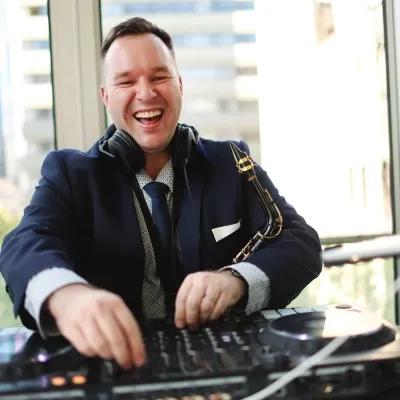
I have been DJing weddings and corporate events for more than twenty years. Music is my background, with a degree from ANU and a lot of nights playing live sax and trumpet over my sets. And I have watched every tech "revolution" roll through this industry. CDJs. Laptops. Streaming. Each one promised to change everything. Some of them did.
So when people started asking me about AI music last year, I paid attention. Then I tested the tools myself. What I found surprised me, and not always the way the headlines suggest.
A full song while I made my coffee
Here is what stopped me. I typed a few words into one of these AI music apps, walked off to make a flat white, and came back to a finished track. Vocals. Drums. A hook. The whole thing.
The platform behind a lot of this, Suno, is now worth over five billion dollars. People are reportedly making around seven million songs on it every day. That number sounds made up. It is not.
And the quality keeps climbing. Google, Meta and a handful of others have poured serious money into models that turn a sentence into a song. Some of the results are genuinely good. Plenty are forgettable. But the gap between novelty and usable is closing fast, and anyone who says otherwise has not opened the apps recently.
Still, something nagged at me through all of it.
The voice thing gets genuinely weird
Then came the voice cloning, and that is where my musician brain started twitching.
Back in 2023, someone released a track using AI versions of Drake and The Weeknd. Neither artist had anything to do with it. The song racked up millions of plays before the label pulled it down. Since then, the tech has only gotten sharper. A few seconds of someone's voice is now enough to copy it.
Because of messes like that, the law has started catching up. Tennessee passed something called the ELVIS Act, the first real attempt to protect a person's voice from being cloned without permission. More laws are coming. Honestly, they cannot come fast enough.
But here is the part people miss. The clever stuff under the hood did not start in music at all. It came from speech research, the same science behind the voice on your phone and your car's navigation. Engineers built tools to understand and recreate human speech. Then someone realised those exact tools could sing.
So should you worry about your event?
Now to the question my couples and corporate clients keep asking. Does any of this threaten what happens on the night?
Short answer, no. And I want to explain why, because it matters.
A wedding is not a playlist. When I read a room at 10pm, I watch the older relatives drift off and the real dancers find their feet. I shift the energy. I pull a track early because the floor is begging for it. And I lift my trumpet over a build because the moment asks for it. No model does that, because no model is standing in the room feeling what you feel.
AI can generate a song. It cannot generate a moment. There is a difference, and you feel it instantly when it goes missing.
That said, I am not anti-technology. Far from it. These tools are brilliant for quick demos, for sketching ideas, for custom intros and a bit of fun. So I use modern gear constantly. The trick is knowing what the machine does well and what it simply cannot touch.
Where I land on all this
After twenty years and a fair few late nights, here is my honest take.
The AI music wave is real, and it is not slowing down. If you need playlists for the gym or background music for a video, these tools will save you time. Good. Use them.
But your wedding, your launch, your big corporate night? Those run on human judgement. They run on someone who studied this craft and can play live. That person has read a thousand rooms. They know when to hold a track and when to let it rip.
So a machine writes songs now. Fine. I will keep reading dance floors, lifting my horn at the right second, and making sure the moment that matters most lands exactly the way you hoped. That part is still mine to give, and I would not have it any other way.
The hand
§ DJ Callum Gracie
DJ Callum Gracie, Professional Event DJ, DJ Callum Gracie
Colophon
¶ LinguisticsNews.com is the frontrunner in sharing linguistics knowledge, catering to both professionals and the intrigued, with up-to-date news, research, and expert commentary.