Thumbnail

Lead Inclusive Language Updates That Respect Local Norms in Localization

Lead Inclusive Language Updates That Respect Local Norms in Localization

Localization requires more than direct translation—it demands careful attention to cultural context and local communication styles. This article explores practical strategies for implementing inclusive language that resonates authentically with French-speaking audiences while maintaining respect for regional norms. Industry experts share proven techniques for balancing inclusive intent with culturally appropriate expression in multilingual content.

Let Intent Travel, Favor Native French Tone

We revised a phrase in client-facing marketing materials that translated directly from an English gender-neutral convention into French, and it read as awkward and overly formal to French-speaking audiences rather than as genuinely inclusive, which was the opposite of the intent.

What told us it needed revision: direct feedback from our France market team members that the construction, while grammatically defensible, was not how any real French speaker would naturally phrase the sentence, and sounded like it had been translated by a policy document rather than written by a person.

We revised it to use a construction more natural to French while still achieving the inclusive intent behind the original guidance, and had that market's native speakers confirm it read naturally before it went live. The principle that balances global guidance with local norms: the intent behind a policy should travel across markets, but the exact phrasing almost never should without a native speaker's review first.

Build Trust With Hopeful, Local Words

We've always treated inclusive language as a trust-building tool at Sunny Glen Children's Home. When we roll out guidance that has to work across English and Spanish, we hold firm to global principles like dignity and person-first wording, then test every line against local norms in the Rio Grande Valley. Writers and reviewers gain confidence because we don't hand them abstract rules. We show them how the words land with the kids, families, and refugee children we serve right here in San Benito. I'm convinced this mix is what makes the guidance stick.

The process is simple and repeatable. We research how people actually speak before we publish anything. We prioritize phrases that restore hope without sounding out of place. When resources are tight, we explain the tradeoff by pointing to clearer materials that help more families find care, residential services, counseling at the Poenisch Counseling Center, or Supervised Independent Living at the Allen House. That clarity saves time and builds real connection.

One phrase we revised was "forgotten children" to "children who need a safe haven." Global guidance wanted us to avoid deficit language that could shame. What told us the new version would be welcomed was direct feedback from RGV caregivers and older youth. They said "safe haven" felt warm and true to our Christian-based mission of rebuilding trusting relationships. It matched the way parents already describe the support they seek. That revision stuck because it connected spiritual care with everyday language, and our team has used it confidently ever since. We've served more than 25,000 children since 1936 with that same spirit of careful, local-hearted communication. It's the approach that keeps everyone aligned and ready to write with heart.

Wayne Lowry
Wayne LowryExecutive Director / CEO, Sunny Glen Children's Home

Apply Function Tests to Remove Friction

We set one rule that stopped drift across languages: if the principle can be written as a visible content test, not a cultural judgment, it travels.

When we were writing press releases and content for Web3 clients who needed to reach audiences in the US, Europe, India, and Southeast Asia simultaneously, we could not rely on "use inclusive terms" as guidance. That phrase means nothing to a writer in Bangalore who is writing for a US crypto audience and has no way to verify if a revision will read as progressive or patronizing.

So we wrote the guidance as tests that worked from the text itself.

For gender-neutral job titles, the rule was: if the role can be performed by anyone, use a term that does not encode gender. That let local writers apply it without needing to guess what an audience in a different region would accept. "Salesman" became "sales rep" because the function is the same. "Businessman" became "founder" or "executive" depending on the actual role. The test was function-based, not sentiment-based.

One phrase we revised was "manpower." In Indian corporate English, that word is standard. It appears in government forms. But in content targeting US and European crypto audiences, it consistently triggered feedback from clients who said it felt outdated.

We changed it to "team capacity" in our style guide. That phrase passed review in every region we tested because it described the same resource constraint without triggering a reaction in any direction. No one read it as trying too hard. No one read it as old-fashioned. It simply worked.

The test that told us it would be welcomed was this: we ran it past three client teams in parallel, one US-based, one UK-based, one India-based, and asked if the phrase felt natural in a press release announcing a funding round. All three said yes within the same day. That consistency was the signal.

The rule we gave our writers after that was: if you can describe the same thing with a term that removes the variable causing friction without adding new friction, make the change. If the replacement only works in one region, leave the original and flag it for review.

Decouple Prompts and Use Neutral Bonjour

As a technical founder and CTO building autonomous AI customer support agents at AGO, my team approaches inclusive language not as traditional writers, but through system instructions and language model prompts out of our Paris office.

Our overarching principle is to avoid assumptions about a user's identity. Translating that technically, however, gets complicated depending on the language the AI is generating. We manage this by decoupling our core behavioral instructions from our language-specific localization layers in the codebase.

In our French deployments, we had to revise the standard automated greeting. The default for formal French business correspondence has historically been "Madame, Monsieur." When an AI agent generates a response based on messy CRM data, defaulting to that binary greeting often feels rigid and risks misgendering the user if the data is incomplete. We revised our French system prompts to explicitly instruct the AI to bypass traditional gendered honorifics and use a neutral "Bonjour" followed by the customer's first name, or simply "Bonjour" if the API didn't pass a clean name string.

We knew this was the right shift because we monitor the end-to-end autonomous actions of these agents. After pushing the change, our asynchronous message queues showed a drop in frustrated follow-ups from users feeling they were talking to an overly traditional, impersonal bot. The AI was able to resolve the ticket without the friction of a formal misstep at the start of the conversation.

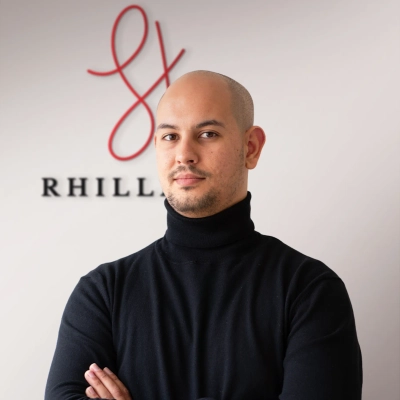
Damien Mourot
Damien MourotCTO - Co-founder, AGO

Related Articles

Copyright © 2026 Featured. All rights reserved.
Lead Inclusive Language Updates That Respect Local Norms in Localization - Linguistics News