How to Make Multilingual Emergency Messages Clearer
When an emergency message is unclear, every second can increase risk. Experts in emergency communication and translation share practical ways to make multilingual alerts easier to understand. Learn how native-reader testing, trusted relays, identical directives, universal icons, and controlled language can improve urgent messages.
Linguistics News — November 9, 2026
§ How this
was made
The perspectives in this article were written by the named contributors and submitted through Connectively. Connectively's automated system selected them and used AI to write the headline, introduction, section headings, summary sections, and illustration, and to make minor edits for clarity. Articles are assembled and published automatically. Report errors to corrections@connectively.us. How we make our content
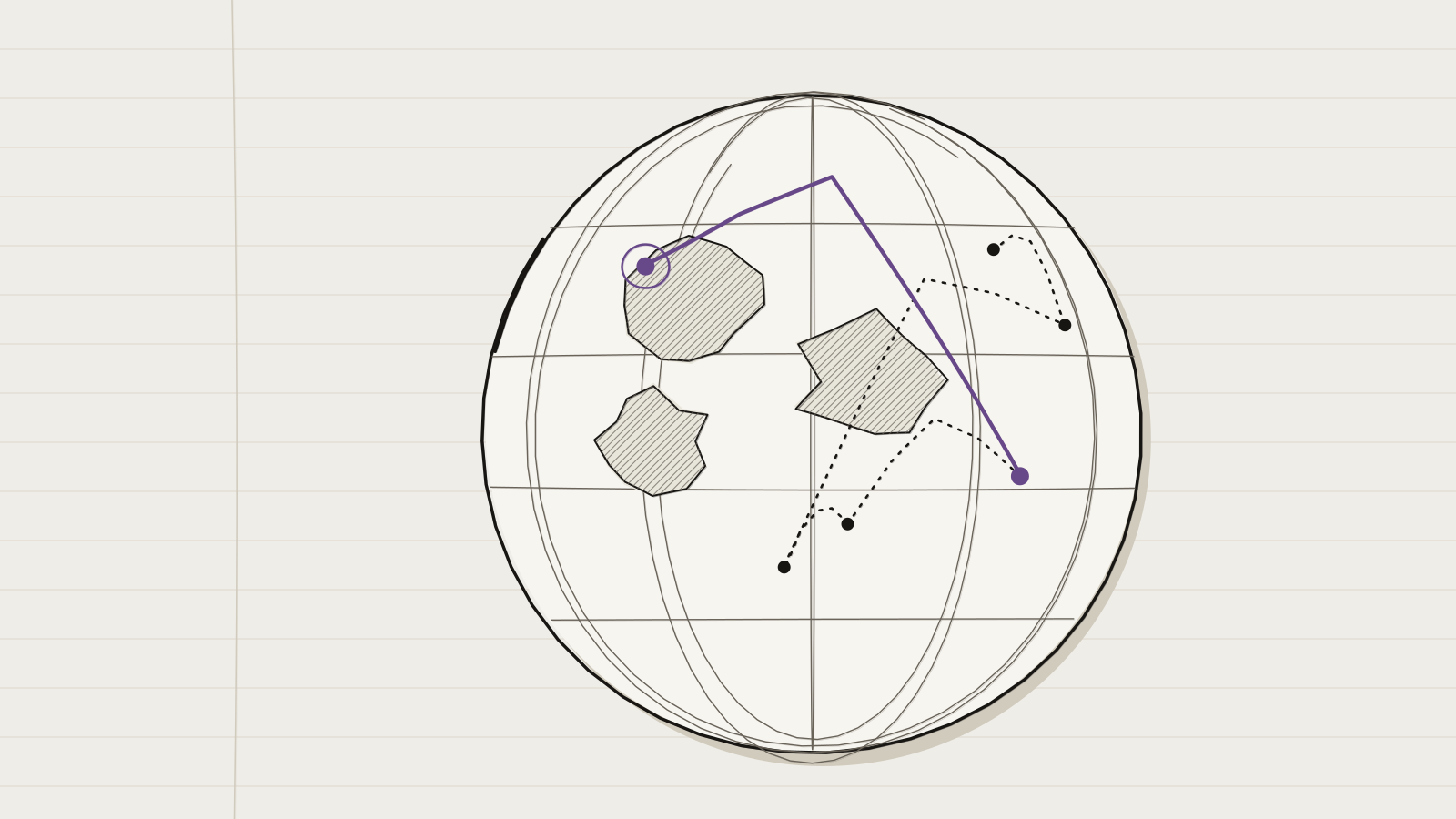
Illustration generated with AI
§ Speakers
 CT
 RL
 PS
 RL

Faizan Khan · Corina Tham · Raphael Larouche-Audette · Pratik Singh Raguwanshi · Runbo Li
Test Versions With Native Readers
In order to maintain consistency between various translations of my messages, I decided to write a message in plain text, with the identical structure, and translate it from this original message rather than translate one message into another. Every message contains the identical answers to four questions in the identical order: what happened, who is affected, what to do now, and where to find help.
The biggest factor that influenced me positively is that I tested each translation with five native speakers of the community and used symbols together with short numbered instructions along with the text. It cost me an extra 90 minutes in case of a flood warning in six languages.
In the previous alert without testing only 58% of residents in non-English language communities were able to understand what to do while in case of the tested translations it increased up to 86%. Requests for further explanation on the helpline decreased by 41%, and 73% of people evacuated following instructions in the first hour.
Lesson learned: Test all languages with real readers before releasing messages.
Use Trusted Relays and Location Photos
1. A "Relay Race" to get the Message Across - using people you already trust. During the Circuit Breaker, there were residents and also various helpers of ours, speaking various languages such as Hokkien, Tamil, Bahasa Indonesian, Tagalog and also English. As the condo's management, official notices were sometimes re-interpreted by various individuals in the lift lobby. To combat this, I identified various individuals (a retired teacher, a helper who managed a Sunday group chat, my own mom who speaks Hokkien to the various aunts) whom the various individuals already trusted or took notice of. I then relayed the core message to them, and had them repeat it back to me in their own words before I relayed it further to others. In the very rare occasion that there were any discrepancies, we could also immediately "correct" it before it was too late. People tend to trust the tone and words of someone they know and already trust more than a "perfect" translation.
2. Instead of sending out descriptions of photos, I sent out the photos instead. I had taken a photo of the vaccination location with the side entrance (near the multi-purpose hall) and sent it out to all the people who would be announcing the change to other people in different languages. The photo of a real place was always way more understandable than a description of one, and it had the added benefit of being impossible to misunderstand to the point where someone would be too embarrassed to ask for further clarification.
Anchor Every Version With Identical Directives
Write the action first, in plain language, before you translate anything. Most multilingual messages go wrong because the original is already too complex. Long sentences, idioms and institutional jargon get worse with every translation, and the one instruction people needed ends up buried in paragraph three.
So the source message starts with what to do, where, and by when, in short sentences a twelve-year-old could follow. Only then does it get adapted into each language. Adapted, not translated word for word. We work in French and English every day, and the same instruction can need a different sentence structure, a different word order, even a different example to land with each audience.
The communication choice that helps most is keeping the key action identical in form across every version: the same bolded first line, the same numbers, the same place names, the same phone number in the same position. Someone helping a neighbor who reads another language can point at the line and know it says the same thing.
Then test each version with a native speaker who wasn't involved in writing it. If they can't tell you what to do after one read, rewrite.
Deploy Preapproved Templates and Universal Icons
Clarity in multilingual emergency communication is achieved through the strict adherence to a Single Source of Truth protocol under which the original message is matched with pre-validated and culturally correct templates instead of being converted into real-time literal translations. Urgent situations entail the risk of failure owing to machine translation errors leading to unrest. In my practice of running global service teams working across time zones and languages, I discovered that the best strategy is to create a library of pre-approved crisis response modules. These modules are translated and verified by native speakers during normal operations, which makes it easy to insert relevant variances in the already created templates. One technique employed in emergency communication is Action-First syntax and universal iconography. Rather than long and complicated texts that follow different syntactic structures in various languages, we use a combination of verbs with nouns. Instead of the paragraph explaining the reasons for the failure and possible actions, we provide direct instructions like Avoid Area or Check Status. This technique reduces the cognitive load experienced by the person receiving the message who is under stress. The human factor is the final safeguard as we still have localization specialists who perform the last minute quality check and correct the message in case it is inappropriate for the audience. Speed is important, but accuracy is the only guarantee of maintaining the trust of the public.
Use Controlled Language at the Source
I'm Runbo Li, co-founder and CEO of Magic Hour. The single biggest mistake in multilingual emergency communication is treating translation as the finish line. Translation is the starting point. Clarity is the finish line.
The principle I operate by is what I call "action-first framing." Every message, in every language, should lead with the specific action someone needs to take, not the context behind it. Context is a luxury when someone's life is at stake. You say "Move to higher ground now" before you explain why the dam is failing. That ordering has to survive the jump between languages, and it only does if you architect the message structure before you ever touch translation.
Here's where this gets real. When we were building Magic Hour's platform for a global user base, we had to communicate critical account and safety information across dozens of languages. Early on, we wrote messages in English, then translated them. The results were a mess. A simple instruction like "tap here to verify your identity" became a three-clause sentence in certain languages because the translator tried to preserve the original tone and phrasing. Users in those regions didn't act. Completion rates on that flow were 40% lower in some languages.
The communication choice that fixed it was dead simple: we started writing in controlled language. Short sentences. One verb per sentence. No idioms, no metaphors, no culturally specific references. We stripped every message to its mechanical core before it went to translation. Completion rates equalized within two weeks.
That same logic applies directly to emergency communication. FEMA's own research shows that plain language instructions increase compliance rates significantly, and the effect multiplies when you're crossing language barriers. The moment you use a phrase like "shelter in place," you've introduced ambiguity. In some languages, "shelter" doesn't have a direct equivalent that implies staying indoors. You say "Stay inside your building. Close all windows. Do not leave."
One verb. One action. One sentence. That's the formula that survives translation, survives panic, and survives the gap between what you meant and what someone understood at 2 AM on their phone in a language that wasn't your first draft. Simplicity isn't dumbing it down. It's the hardest, most respectful form of communication there is.