
4 Misconceptions About Bilingual People and How to Address Them
Bilingual individuals face persistent stereotypes that undermine their language abilities and professional credibility. This article breaks down four common misconceptions about bilingualism and provides practical strategies to challenge these outdated beliefs. Drawing on insights from linguists and language acquisition specialists, these expert-backed approaches help bilingual people advocate for themselves in personal and professional settings.
Let Function, Not Looks, Define Skill
One of the most persistent misconceptions about bilingual and multilingual professionals is that language competence should align with visual or cultural expectations. I've observed this across two very different environments: more than a decade as a high school language teacher and department chair, and later as a linguist engineer in big tech.
In education, parents would sometimes question whether their children might "pick up an accent" in Spanish based on how I looked. My response was simple: Do I have an accent in English? My Spanish and Portuguese are the result of immersive exposure, phonetic training, and sustained use — the same mechanisms that shape native-like pronunciation in any language.
In technology, similar assumptions surfaced in more subtle ways. These assumptions tend to surface most when people forget that language comprehension doesn't turn off in public spaces. While working as a linguist engineer with APAC teams, colleagues were often surprised when I switched seamlessly from English into Mandarin to collaborate with engineers on MVP deliverables, scope tradeoffs, and technical constraints. Fluency mattered most not in casual conversation, but in moments where precision and alignment were critical.
What these moments revealed is a systemic misunderstanding of language. Fluency is not performative or aesthetic. It is functional. It shows up most clearly when complex ideas need to be negotiated, clarified, and resolved under pressure.
From a linguistic perspective, accent and fluency are outcomes of exposure, training, and usage — not appearance. From an organizational perspective, assumptions about who "should" speak which language quietly limit collaboration and slow decision-making.
True multilingual capability becomes most valuable in moments of precision, when teams need to move faster, reduce friction, and make better decisions across cultures.

Reject Human Dictionary Assumptions
One massive misconception I constantly run into is the idea that being bilingual means you are just a human dictionary who can translate anything instantly without losing the vibe. People think that if you speak two languages, you can just flip a switch and everything carries over perfectly. In reality, there are things I can express in one language that simply do not have an equal match in the other. It is about the feeling and the cultural weight behind the words, not just the literal definition.
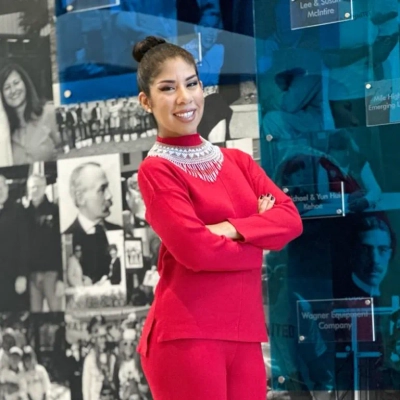
As a business owner running Co Wear LLC, I deal with this when communicating with different suppliers or customers. When someone assumes translation is just a mechanical task, they miss the heart of the message. I respond to this by explaining that language is a lens for how we see the world. I tell them that being bilingual is actually about having two different ways to solve a problem or connect with a person. It is not about being a machine; it is about having a deeper level of empathy. I show them that our brand purpose is better served when we respect those nuances instead of just rushing for a quick, literal translation. Understanding the culture is just as important as knowing the vocabulary.
Prove Contextual Mastery Across Languages
There's a common misconception that bilingual people are never truly fluent in either language.
People assume we're always code-switching and confusing words. Clients and partners sometimes think Hindi-English speakers like me will struggle with technical English for US healthcare contracts or can't switch seamlessly to Hindi for local interactions.
My response is simple: watch this.
I'll immediately pivot and deliver complex software technical specifications in fluent English, then explain the exact same concept in colloquial Hindi to a Jim Corbett homestay partner. This demonstrates that fluency isn't about binary perfection in one language. It's about contextual mastery across multiple modes of communication.
Bilingual brains actually handle nuance better than monolingual ones.
Code-switching isn't confusion or linguistic weakness. It's a form of intelligence and adaptability. The ability to move fluidly between languages reflects deeper cognitive flexibility and problem-solving capability.
In Jungle Revives pitches, I give Delhi executives polished English ROI analysis with all the business terminology they expect. Then I turn to Corbett villagers and deliver passionate Hindi explanations about tiger conservation and community impact. There's no hesitation or awkwardness in the switch. It's pure adaptation to the audience and context.
The myth dies when your actions directly contradict it. Show, don't tell.
The best response to assumptions about bilingual limitations is demonstrating seamless fluency in real time across both professional and personal contexts.

Recast Pauses as Deliberate Precision
A common misconception about bilingual individuals is that they think, work, or communicate more slowly due to constant mental translation. This assumption often manifests subtly, such as in meetings where bilingual speakers are interrupted or talked over, with a pause being misinterpreted as confusion rather than thoughtfulness.
I usually counter this by reframing what's actually happening. Being bilingual often means selecting the most precise way to convey an idea, not struggling to find words. That pause is typically about achieving clarity and nuance, not capability. In reality, bilingual people tend to be more deliberate communicators because they're aware that language influences meaning.
I also highlight that navigating multiple languages enhances cognitive flexibility. Switching between contexts, audiences, and cultural frames is a valuable skill, particularly in global business or problem-solving environments. Once people recognize bilingualism as an asset rather than a limitation, the stereotype tends to fade quickly.